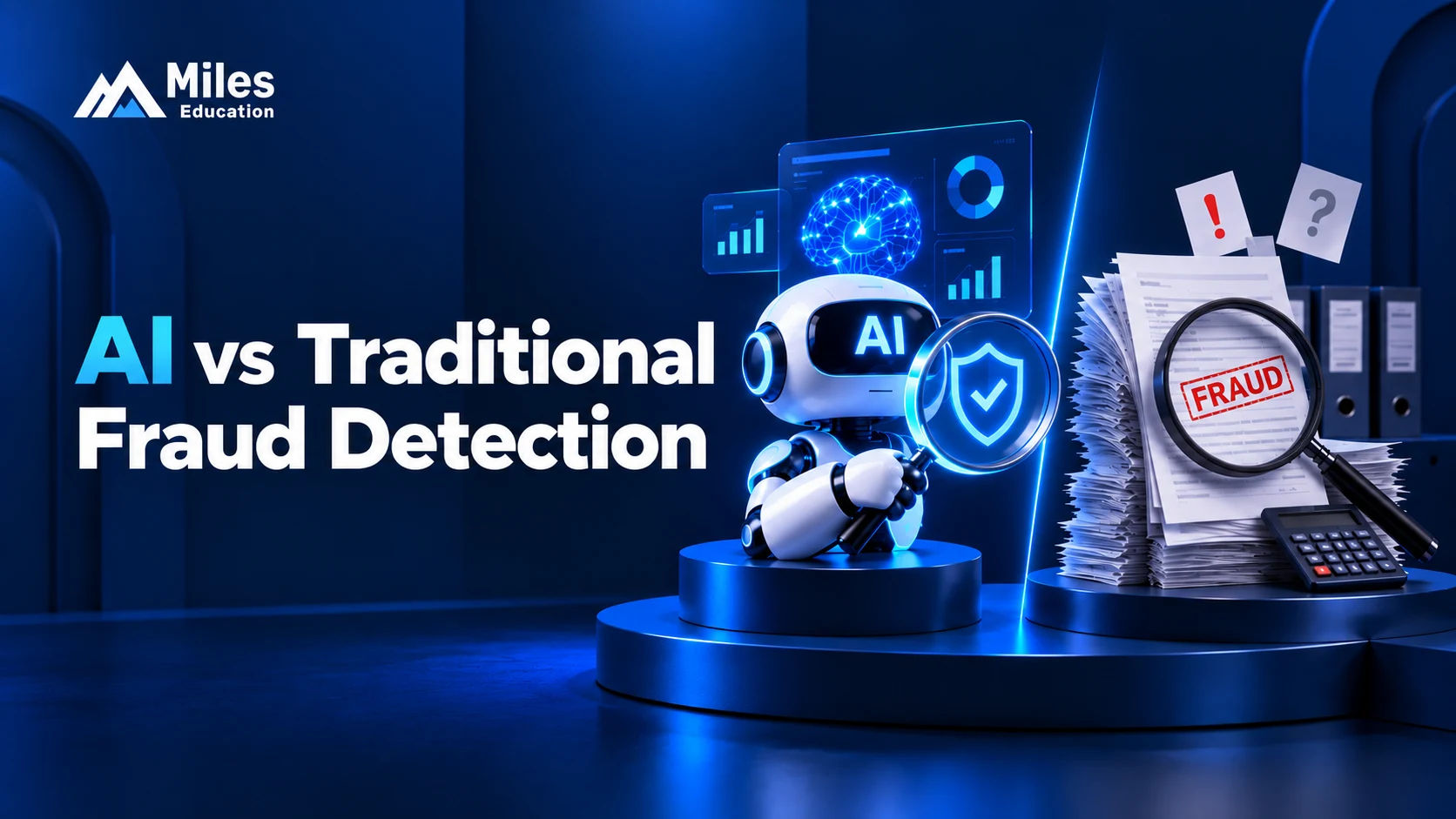
The Core Shift: Why Rule-Based Frameworks Fail
Traditional anti-fraud measures operate on strict, mechanical limitations. A corporate bank might program a security rule to automatically block any transactions over $5,000 originating from an international IP address. While this logic is effective for highly basic scenarios, organized financial criminals easily bypass these fixed parameters using virtual private networks and proxy servers.
Fraud detection using machine learning entirely eliminates these predictable blind spots. Instead of relying on static limits, the system simultaneously analyzes hundreds of unique, unstructured user variables. It evaluates subtle metrics like user typing speed, complex device fingerprints, geographical context, and long-term historical purchasing behavior. The software compiles this massive data pool to generate a highly precise risk score in a fraction of a second.
When deploying machine learning for fraud detection, enterprise institutions fundamentally shift their posture from reactive defense to proactive prediction. The software instantly flags subtle behavioral deviations that human investigators and basic logic trees completely miss. It connects disparate dots across global networks to stop the transaction before the funds ever leave the corporate account.
The modern banking sector faces unprecedented, highly sophisticated threats. Criminals actively leverage generative AI to create synthetic identities, deploy automated voice deepfakes, and bypass standard voice biometrics. Financial enterprises must rapidly deploy advanced fraud analytics in banking to dismantle these organized criminal networks before they drain capital.
Utilizing AI for fraud detection delivers massive operational returns for large-scale financial institutions. Organizations replacing their legacy rules with adaptive machine learning models have achieved a massive 20% to 30% reduction in their annual fraud losses.
These advanced systems break down operational silos by unifying previously fragmented data sources. By merging traditional anti-money laundering (AML) operations with real-time transaction monitoring, banks create holistic, comprehensive customer risk profiles.
The transition to fraud detection machine learning also drastically reduces operational friction for banking employees. By intelligently minimizing false positive alerts, internal banking investigation teams can dedicate their exclusive time and energy to genuine, high-risk security threats.
The Modern Accountant's Role in AI Security
Certified financial professionals can no longer rely exclusively on manual historical audits to verify corporate security. Corporate controllers, internal auditors, and risk managers must actively understand and manage these predictive algorithms.
An internal auditor must ensure that the deployed AI in fraud detection operates transparently, free from inherent algorithmic bias, and fully complies with strict international data privacy regulations. Financial leaders must bridge the technical gap between software engineering teams and executive boardrooms. They are responsible for proving the direct financial return on investment of these systems by tracking precise loss reduction metrics against the initial deployment costs.
The global corporate finance world relies heavily on this digital technology. Basic manual data sampling is completely obsolete. If you want to secure a high-paying executive financial career, you must understand how to confidently command these digital security platforms.
Build Your Technology Arsenal with Miles Education
Bridging the massive gap between traditional academic accounting theory and high-level predictive corporate analytics requires elite mentorship. Do not attempt to navigate the modern, tech-driven financial landscape using outdated university models.
At Miles Education, we build world-class, future-ready financial leaders. Guided by industry expert Varun Jain, our interactive masterclasses completely eliminate boring rote memorization. We focus heavily on deep conceptual clarity and practical business execution for elite global credentials like the US CPA and US CMA.
We ensure your elite skill set completely survives the massive digital automation wave currently hitting the corporate finance sector. Through our exclusive Certified AI-Ready Accountant (CAIRA) program, you will learn exactly how to integrate powerful artificial intelligence tools directly into your daily corporate audit workflows. You will master Microsoft Copilot, advanced data analytics, and digital AI agents to execute complex financial models faster and more accurately than ever before.
Through the premium Miles Talent Hub, we actively connect our tech-enabled graduates directly with top Big 4 accounting firms and massive multinational Global Capability Centers (GCCs).
Understanding modern AI fraud strategies represents the absolute new baseline for global financial security. Knowing how to leverage this technology is a strict requirement for modern corporate auditors and financial controllers. Take total control of your professional growth today. Partner with elite mentors at Miles Education, master advanced corporate financial strategy, build your technological execution skills, and confidently claim your massive executive salary.
Frequently Asked Questions (FAQs)
1. How exactly does AI fraud detection differ from traditional systems?
Traditional systems rely heavily on rigid, pre-programmed rules that continuously struggle to catch new, unmapped scams. Modern artificial intelligence utilizes dynamic behavioral analytics to evaluate millions of data points instantly, automatically adapting to emerging threats without requiring manual human intervention.
2. What is the true impact of fraud analytics in banking today?
Advanced analytics actively unifies fragmented customer data to expose complex, multi-channel criminal networks. By analyzing real-time behaviors rather than just static transaction limits, banks have successfully reduced their annual financial losses by up to 30% while dramatically lowering annoying false positive alerts.
3. Is fraud detection using machine learning expensive to implement?
While initial software deployment and integration costs are higher than standard rule-based frameworks, the massive reduction in financial losses and operational labor quickly offsets the upfront investment. Enterprise AI platforms effectively scale to handle massive transaction volumes without any system performance degradation.
4. How does AI for fraud detection handle false positives?
Machine learning drastically minimizes false positives by evaluating a user's holistic behavioral context rather than flagging isolated actions. This highly intelligent risk scoring ensures that internal banking investigation teams only spend their time reviewing genuinely suspicious, high-threat activities.
5. Do CPAs and CMAs need to understand AI in fraud detection?
Yes, modern certified accountants and corporate auditors must possess deep technological fluency. Financial professionals are responsible for evaluating enterprise internal controls, ensuring algorithmic transparency, and measuring the precise financial return on investment of these automated digital security systems.