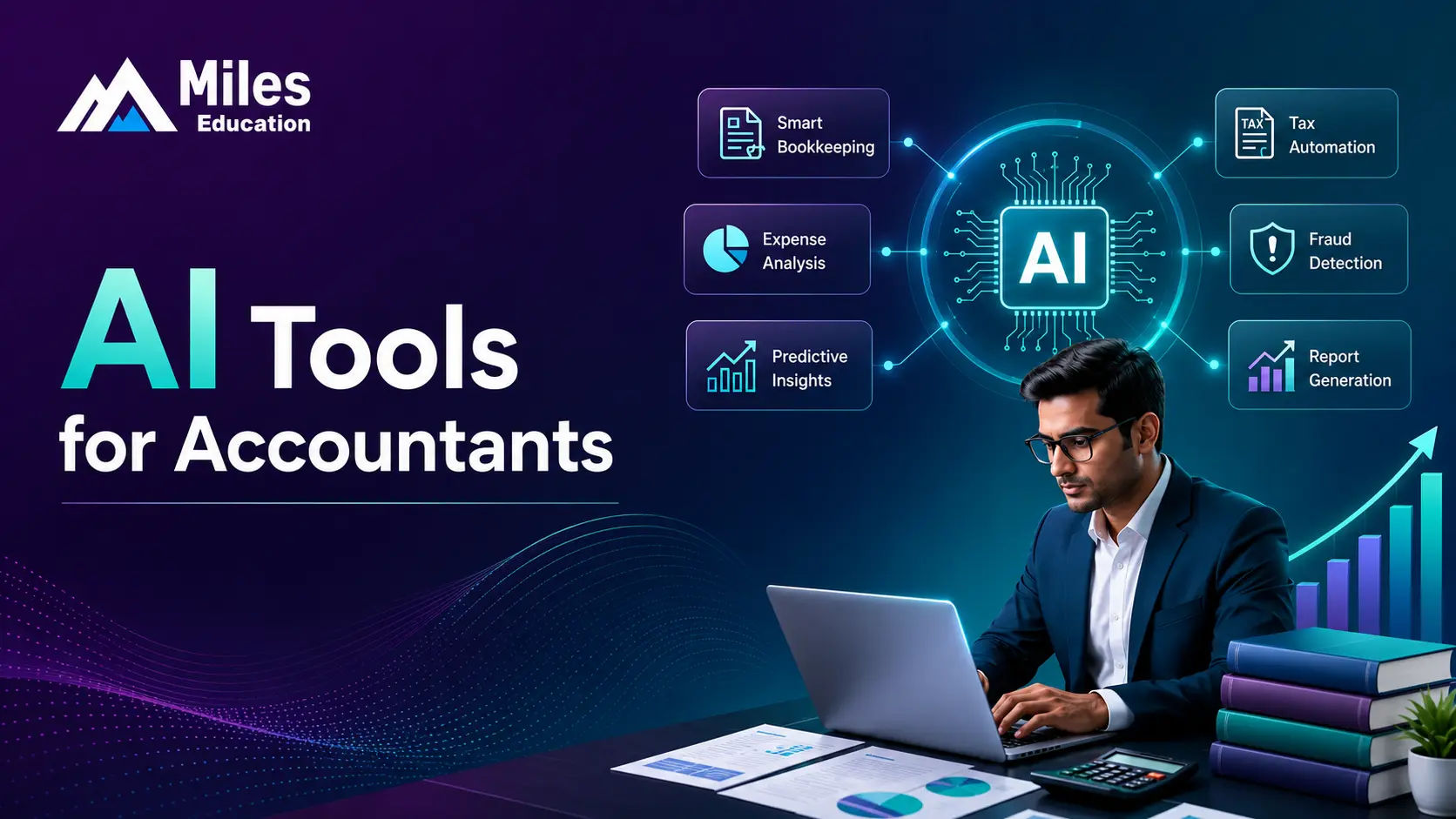
How Accountants Are Using AI in 2026
AI is already influencing nearly every area of the accounting workflow.
Bookkeeping and Transaction Processing
Modern accounting systems can automatically categorize expenses, match invoices, and reconcile bank transactions. Instead of entering data manually, accountants review exceptions and resolve issues that require judgment.
Financial Close and Reporting
Many organizations now use AI-assisted reconciliation and reporting tools throughout the month. Potential issues are identified earlier, reducing the pressure associated with traditional month-end close cycles.
Audit and Risk Assessment
Audit teams increasingly use AI to analyze complete datasets rather than relying solely on sampling techniques. This makes it easier to identify unusual transactions, high-risk areas, and potential control weaknesses.
Tax Compliance
AI-powered tax tools help professionals prepare returns, identify inconsistencies, track regulatory updates, and manage large volumes of compliance-related work more efficiently.
Financial Analysis
Instead of spending hours building reports, finance teams can use AI to generate dashboards, summarize trends, and draft management commentary based on financial performance.
The common theme across all these applications is simple: AI handles routine processing while accountants focus on oversight, interpretation, and decision-making.
1. ChatGPT
For many accountants, ChatGPT is the first AI tool they use regularly.
It can help draft client emails, summarize accounting standards, explain technical concepts, create meeting notes, and assist with research. While it should never replace professional judgment, it can significantly reduce the time spent creating first drafts and conducting preliminary analysis.
Many professionals also use ChatGPT to simplify complex financial topics before presenting them to clients or internal stakeholders.
2. Microsoft Copilot, Power BI, and Power Automate
If you’re trying to decide which AI tools accountants should focus on in 2026, the answer for many finance teams in India is surprisingly straightforward. Rather than adopting multiple standalone AI platforms, many organizations are seeing the greatest value from Microsoft’s integrated ecosystem because it works seamlessly with the software accountants already rely on every day.
Microsoft 365 Copilot serves as an intelligent assistant across familiar applications like Excel, Word, Outlook, and Teams. Instead of spending hours building formulas, summarizing meetings, or drafting reports, accountants can use Copilot to analyze financial data, explain trends and variances, generate insights, and prepare client-ready documents much faster.
For deeper reporting and analysis, Power BI transforms raw financial information into interactive dashboards that update in real time. It helps finance teams monitor key performance indicators, identify unusual transactions, uncover patterns across complete datasets, and support better business decisions through visual analytics rather than manual reporting.
When it comes to repetitive operational work, Power Automate simplifies routine processes by connecting different business applications and automating rule-based tasks. Approval workflows, document filing, reminders, and data movement between systems can all be handled automatically, while maintaining a clear audit trail for compliance and accountability.
Together, these Microsoft solutions create a connected workflow where AI assists with daily productivity, analytics deliver actionable business insights, and automation eliminates repetitive manual work. The result is a finance function that is faster, more accurate, and better equipped to support strategic decision-making.
The best part is that you don’t need a programming background to start using these technologies effectively. Through the CAIRA (Certified AI-Ready Accountant) programme from Miles Education, accounting professionals gain practical experience with Microsoft 365 Copilot, Power BI, Power Automate, Copilot Studio, and agentic AI. The programme focuses on applying these tools to real accounting and finance scenarios, helping professionals build AI skills they can use immediately in the workplace.
3. MindBridge
MindBridge has become a popular choice among audit and assurance professionals.
The platform uses machine learning to examine large volumes of financial data and identify unusual patterns, anomalies, and risk indicators. Instead of reviewing only selected samples, auditors can gain visibility across an entire dataset.
This broader perspective can improve risk assessment and help audit teams focus attention where it matters most.
4. Ramp
Ramp combines expense management, corporate cards, and AI-driven accounting workflows.
One of its most valuable features is the ability to automatically categorize transactions and identify exceptions that require human review. By reducing manual coding and approval work, finance teams can speed up month-end processes and improve operational efficiency.
5. Vic.ai
Organizations processing large numbers of invoices often turn to Vic.ai to automate accounts payable activities.
The platform can read invoices, predict account coding, and identify unusual transactions before they enter the accounting system. This helps reduce manual effort while maintaining visibility and control over financial processes.
6. BlackLine
BlackLine focuses primarily on financial close management.
Many large organizations use it to automate reconciliations, manage approvals, maintain documentation, and improve compliance throughout the close process.
For companies seeking greater consistency and visibility during month-end activities, BlackLine remains a widely recognized solution.
7. QuickBooks with Intuit Assist
QuickBooks continues to be a leading accounting platform for small and medium-sized businesses.
With the addition of Intuit Assist, users can automate transaction categorization, generate reports, answer financial questions using natural language, and manage bookkeeping tasks more efficiently.
The AI features are particularly useful for businesses looking to reduce administrative workload without investing in complex enterprise systems.
8. Zoho Books AI
Zoho Books has become a popular option for Indian businesses due to its strong local compliance capabilities.
The platform supports GST workflows while also offering AI-assisted categorization, reconciliation, and reporting features. For many small and mid-sized businesses, it provides a practical balance between automation and affordability.
9. Clear (ClearTax GST)
GST compliance remains one of the most time-consuming responsibilities for many accounting professionals.
Clear helps automate return preparation, invoice reconciliation, compliance monitoring, and mismatch detection. As transaction volumes grow, automation can significantly reduce the effort required to maintain compliance.
Tax professionals frequently rely on Taxmann for regulatory updates and technical research.
Its AI-powered solutions help users navigate tax laws, track amendments, perform compliance checks, and access relevant guidance more efficiently. For professionals working with Indian tax regulations, it remains an important resource.
Will AI Replace Accountants?
This question comes up in almost every discussion about technology and accounting.
The short answer is no.
What AI is replacing are repetitive tasks that don’t require professional judgment. Activities such as transaction matching, basic data entry, invoice coding, and routine documentation can increasingly be automated.
The skills that remain valuable are the ones that have always distinguished strong accountants: critical thinking, communication, problem-solving, ethical judgment, risk assessment, and business advisory capabilities.
Clients and organizations still need professionals who can interpret information, explain financial implications, make recommendations, and exercise sound judgment when situations become complex.
The accountants most likely to succeed in the coming years will be those who combine technical accounting expertise with a practical understanding of AI tools and workflows.
Final Thoughts
Learning about AI tools is a good starting point. Understanding how those tools fit into real accounting processes is what creates long-term value.
As firms continue to adopt automation, accountants who can effectively use AI will be better positioned to contribute beyond traditional compliance work. They will be able to analyze information faster, support better decisions, and take on more strategic responsibilities within their organizations.
For professionals looking to build these skills, structured learning programs such as CAIRA (Certified AI-Ready Accountant) from Miles Education provide practical exposure to many of the tools and concepts shaping the future of the profession. The program focuses on applying AI across accounting, audit, tax, reporting, and finance workflows so that professionals can confidently adapt to an increasingly technology-driven environment.
The future of accounting is unlikely to be defined by AI alone. It will be defined by accountants who know how to use AI effectively.
Frequently Asked Questions
There is no single best option. ChatGPT and Microsoft Copilot are widely used for productivity and analysis, while Zoho Books, Clear, and Taxmann are popular for Indian compliance and tax-related work. The right choice depends on your role and workflow.
Some of the most commonly used tools include ChatGPT, Microsoft Copilot, Power BI, Power Automate, MindBridge, Ramp, Vic.ai, BlackLine, QuickBooks, Zoho Books, Clear, and Taxmann.
3. How do accountants use ChatGPT?
Accountants use ChatGPT to draft emails, summarize regulations, prepare notes, conduct research, and simplify technical concepts. It helps save time but should always be used alongside professional review.
Yes. Several platforms automate invoice matching, return preparation, reconciliation, and compliance monitoring, helping accountants manage GST requirements more efficiently.
5. How does AI improve audit quality?
AI can review complete datasets, identify unusual transactions, and highlight potential risks, allowing auditors to focus on areas that require deeper investigation.