“ Explore the CPA to CFO career path with a 10-year roadmap, skills & salaries. Become a finance leader with Miles today.
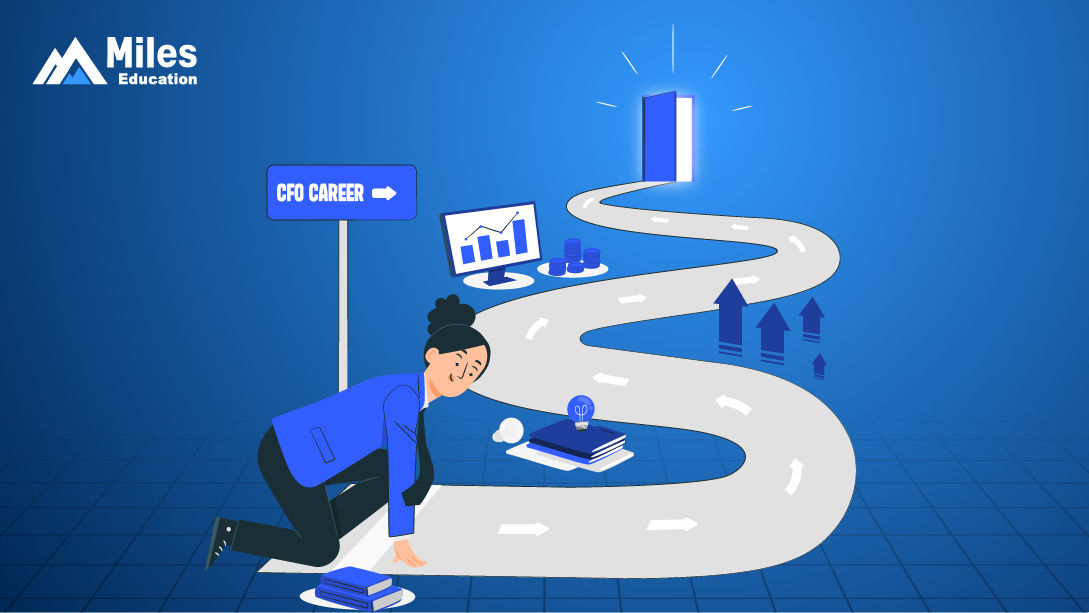
What is the CPA to CFO career path? The CPA to CFO career path is a strategic ten-year professional journey. It transforms a compliance-focused accountant into a visionary corporate finance leader mastering strategy, operations, and executive communication.
In 2026, the Indian corporate landscape demands dynamic financial leadership. Global Capability Centers (GCCs) are expanding rapidly across Bengaluru and other major tech hubs. These global corporations are aggressively seeking professionals who can drive cross-border financial strategies.
Passing your US CPA exam is a massive, life-changing achievement. However, it is only the beginning of your corporate journey. You must intentionally transition from recording historical data to forecasting future corporate success.
Are you ready to climb directly to the executive suite? In this comprehensive guide, we map out the exact decade-long professional blueprint. We will explore the critical milestones, necessary skill transitions, and massive executive salary expectations.
Understanding the Finance Career Progression After CPA
The transition to the C-suite requires a profound mental shift. Your early finance career progression after CPA focuses heavily on technical accuracy. You must ensure absolute compliance with complex US GAAP regulations.
A Chief Financial Officer plays an entirely different corporate game. They focus strictly on capital allocation, risk management, and global investor relations. You must learn to communicate complex financial realities to non-financial stakeholders efficiently.
Set Miles as Your Preferred Source
Make Miles Education your preferred source for CPA & CMA Exam tips, accounting insights, AI tools and industry updates.
10-Year Steps to Become CFO in Finance Career
Climbing the corporate ladder requires deliberate, calculated career moves. Here are the crucial steps to become CFO in finance career mapped over a decade.
Phase 1: The Foundation (Years 1-3)
Start as a Senior Auditor or Senior Financial Analyst.
Master the month-end close and strict statutory reporting requirements.
Build a deep understanding of internal controls and variance analysis.
Phase 2: The Strategic Pivot (Years 4-6)
This phase is where your CPA career growth to CFO truly accelerates. You must transition into Financial Planning and Analysis (FP&A) roles.
Partner with operational teams to build robust departmental corporate budgets.
Leverage data visualization tools to present actionable, clear business insights.
Lead cross-functional projects to optimize global corporate supply chains.
Phase 3: The Leadership Shift (Years 7-9)
You now firmly enter the true accounting leadership career path. Your titles will include Corporate Controller or Vice President of Finance.
Manage large, diverse accounting teams across multiple international geographic regions.
Oversee global tax planning strategies and complex corporate treasury operations.
Present financial health metrics directly to the executive Board of Directors.
Phase 4: The Executive Suite (Year 10+)
You have finally reached the ultimate executive financial destination. As a CFO, you are the CEO's most trusted, strategic corporate advisor.
CFO Career Roadmap for Accountants: Tracking Progression
Visualizing your corporate journey helps you measure your professional growth accurately. Review this table to understand your shifting priorities at each career stage.
Career Stage
Timeline
Primary Focus
Key Executive Deliverable
Senior Accountant
Years 1-3
Technical Execution
Accurate financial statements and compliance.
FP&A Manager
Years 4-6
Strategic Forecasting
Departmental budgets and predictive models.
Corporate Controller
Years 7-9
Team Leadership
Global financial consolidation and risk.
Chief Financial Officer
Year 10+
Enterprise Value
Mergers, acquisitions, and capital allocation.
Core Skills Required for Chief Financial Officer
Technical accounting knowledge alone will not secure the top executive job. The skills required for chief financial officer go far beyond standard spreadsheets.
1. Advanced Technological Fluency
Modern finance leaders must fully embrace artificial intelligence. Routine accounting tasks are becoming fully automated by advanced enterprise systems. You must leverage predictive tools to execute rapid corporate scenario planning.
2. Cross-Border Operations Expertise
Multinational corporations completely dominate the Indian market today. A modern CFO must understand complex international taxation, foreign exchange risks, and global compliance.
3. Elite Executive Communication
You must effectively translate dense financial data into compelling business narratives. The board of directors wants actionable corporate strategy, not just a list of raw numbers.
How to Become CFO After CPA: 2026 Salary Trends
Why endure this highly rigorous, decade-long professional journey? Because the financial rewards at the end are absolutely extraordinary.
Indian professionals navigating how to become cfo after CPA command massive compensation packages. The GCC offshore boom has pushed executive salaries to record-breaking highs.
Here are the realistic 2026 salary expectations for this elite pathway:
Senior Financial Analyst: ₹12 Lakhs – ₹18 Lakhs.
FP&A Manager: ₹20 Lakhs – ₹35 Lakhs.
Corporate Controller: ₹45 Lakhs – ₹75 Lakhs.
Chief Financial Officer: ₹1 Crore – ₹3 Crores+.
These packages frequently include lucrative stock options and massive performance bonuses. Your US CPA license acts as the ultimate multiplier for your lifelong earning potential.
Elevate Your Leadership Journey with Miles Education
Navigating this complex corporate ladder requires continuous upskilling and a powerful network. At Miles Education, we build world-class global finance leaders.
We perfectly prepare you for the technological realities of the modern executive suite. Programs like the CAIRA (Certified AI-Ready Accountant) ensure our alumni possess cutting-edge technological skills. We ensure you are ready to deploy AI seamlessly in enterprise accounting.
Furthermore, the Miles One App provides continuous, high-quality learning resources for busy professionals. Through our extensive corporate partnerships, we connect you directly with elite Fortune 500 GCCs. We provide the vital mentorship to accelerate your executive ascent.
Conclusion
The CPA to CFO career path is highly demanding but incredibly rewarding. It requires relentless professional curiosity, strong leadership, and an embrace of modern technology.
Transition out of historical reporting and step confidently into strategic forecasting. Master the necessary leadership skills, leverage powerful AI tools, and guide your corporation toward profitability. Claim your executive seat in the boardroom today.
Frequently Asked Questions (FAQs)
1. What is the CPA to CFO career path?
The CPA to CFO career path is a structured ten-year professional journey. It transitions a technical accountant into a strategic corporate leader. Professionals move through audit, FP&A, and controller roles before finally reaching the executive suite.
2. How to become CFO after CPA in India?
To master how to become cfo after CPA, you must rapidly expand your skills. Move beyond basic accounting compliance into strategic financial planning. You must learn capital allocation, executive communication, and international corporate risk management.
3. What is the standard timeline for CPA career growth to CFO?
The standard timeline for CPA career growth to CFO spans roughly ten to fifteen years. High-performing individuals who intentionally seek broad operational experience and embrace advanced AI tools often accelerate this structured timeline significantly.
4. What are the core skills required for chief financial officer?
The core skills required for chief financial officer encompass both technical and soft skills. These specifically include predictive financial modeling, advanced technological fluency, cross-functional leadership, and the ability to present complex strategies to corporate boards.
5. What is the ideal CFO career roadmap for accountants?
The ideal CFO career roadmap for accountants starts with a strong US GAAP foundation. It progresses steadily through strategic FP&A roles, advances into a Corporate Controller position, and culminates in leading the entire enterprise finance division.
Uttam Pai Umesh
US CPA- Accounting & Finance Expert
Uttam is a finance professional with over seven years of experience across accounting, auditing, and finance, now teaching at the point where those disciplines meet AI. He teaches accountants how to put AI tools to work in the tasks they already do, and builds learner-focused content that turns complex concepts into steps a student can apply the same week, helping professionals move ahead in their careers with confidence.