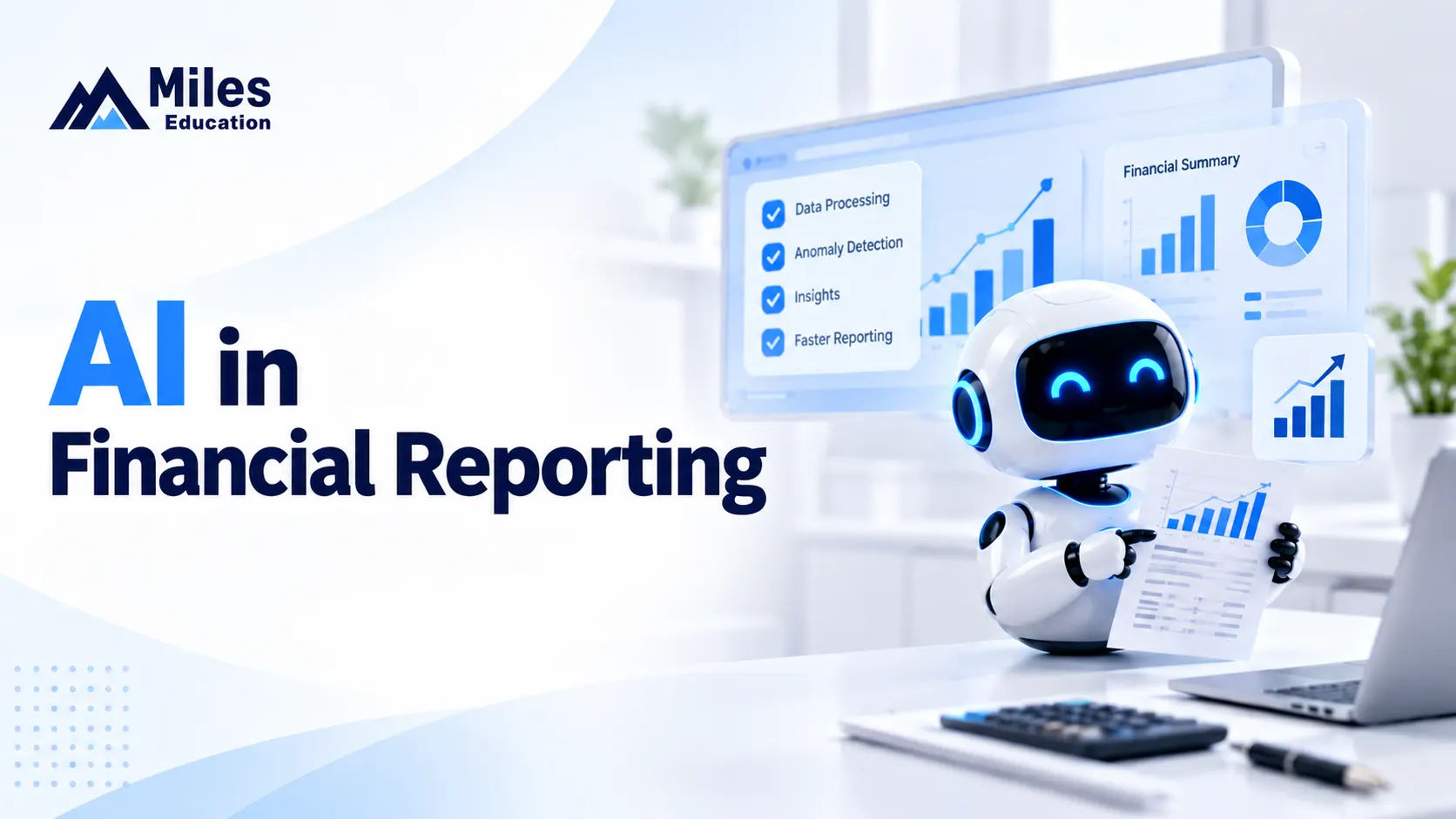
Comparing Manual Frameworks to AI Reporting Software Finance
The structural divide between legacy spreadsheet management and modern automated intelligence dictates how competitively a corporation operates
Operational Metric | Manual Financial Reporting | AI Reporting Software Finance |
|---|
Preparation Time | Requires days or weeks to finalize reports. | Instantly generates insights in real-time. |
Data Accuracy | High probability of manual data entry errors. | Highly precise system-driven data validation. |
Anomaly Detection | Relies on slow, manual sampling by human auditors. | Automatically flags outliers and unusual patterns. |
Consolidation | Difficult to manage multi-entity subsidiary accounts. | Seamlessly executes global multi-company consolidation. |
Scalability | Struggles to scale as the business footprint expands. | Effortlessly scales with massive transaction volumes. |
For candidates looking to optimize their corporate workflows, keeping detailed internal documentation is crucial. Professionals often reference the SEo writing file to ensure consistency and clarity across all internal corporate communication and reporting frameworks.
Mastering modern enterprise software is the absolute baseline for modern financial careers. Chief Financial Officers (CFOs) now actively deploy robust financial reporting automation tools to maintain a single source of enterprise truth.
Top platforms dominating the 2026 corporate market include:
Numeric & BlackLine: These specialized accounting platforms streamline the financial close process by automatically reconciling accounts and instantly turning raw transaction data into CFO-ready summaries.
Power BI & Tableau: These advanced visualization tools integrate directly with enterprise resource planning (ERP) systems. They execute rapid AI financial statement analysis and present intuitive dashboards to executive boards.
Sana Labs & Zapier: These workflow orchestrators automate complex Accounts Payable (AP) and Accounts Receivable (AR) routing. They ensure proper enterprise data governance without requiring manual human intervention.
These elite AI reporting tools accounting platforms empower finance leaders to shift their focus away from tedious data entry. They now focus entirely on strategic narrative synthesis and deep predictive scenario planning.
Unlocking Real Time Financial Reporting AI
The most significant competitive advantage in 2026 is raw operational speed. A recent survey of over 500 financial professionals revealed that 63% are saving more than six hours per week by utilizing artificial intelligence.
By utilizing real time financial reporting AI, corporate treasurers can actively monitor dynamic cash flows. They do not have to wait until the month finishes to identify a liquidity crisis. If supply chain disruptions occur, the AI instantly runs hundreds of alternative financial scenarios in mere minutes.
This level of granular visibility completely transforms the traditional corporate audit. Integrating AI in financial statements allows internal risk managers to verify massive digital ledgers instantly. This ensures that every single transaction complies with strict corporate governance protocols.
Elevating Enterprise Strategy with AI for CFO Reporting
The modern CFO is no longer just a historical scorekeeper. They are predictive, strategic business partners. Leveraging AI for CFO reporting completely redefines how executive leaders present financial health to shareholders and corporate lenders.
Predictive Forecasting: AI deeply analyzes historical sales data to project future revenue growth with up to 40% higher accuracy.
Dynamic Resource Allocation: Automated platforms instantly optimize departmental budgets based on shifting macroeconomic market conditions.
Automated Narrative Generation: Large Language Models (LLMs) draft contextual commentary explaining exactly why specific revenue variances occurred.
Companies that fail to integrate these advanced AI frameworks will quickly lose their competitive market edge.
Master Modern Finance Technology with Miles Education
Bridging the massive gap between traditional academic accounting theory and high-level predictive corporate analytics requires elite mentorship. Do not attempt to navigate the modern, tech-driven financial landscape using outdated university models.
At Miles Education, we build world-class, future-ready financial leaders. Guided by industry expert Varun Jain, our interactive masterclasses completely eliminate boring rote memorization. We focus heavily on deep conceptual clarity and practical business execution for elite global credentials like the US CPA and US CMA.
We ensure your elite skill set completely survives the massive digital automation wave currently hitting the corporate finance sector. Through our exclusive Certified AI-Ready Accountant (CAIRA) program, you will learn exactly how to integrate powerful artificial intelligence tools directly into your daily corporate audit workflows. You will master automated data analytics, Microsoft Copilot, and digital AI agents to execute complex financial models faster and more accurately than ever before.
Through the premium Miles Talent Hub, we actively connect our tech-enabled graduates directly with top Big 4 accounting firms and massive multinational Global Capability Centers (GCCs).
Understanding modern AI accounting strategies represents the absolute new baseline for global financial security. Knowing how to leverage this technology is a strict requirement for modern corporate auditors and financial controllers. Take total control of your professional growth today. Partner with elite mentors at Miles Education, master advanced corporate financial strategy, build your technological execution skills, and confidently claim your massive executive salary.
Frequently Asked Questions (FAQs)
1. What exactly is AI in Financial Reporting?
It is the integration of advanced machine learning algorithms and natural language processing to automatically collect, analyze, and generate precise corporate financial data. This technology eliminates manual Excel data entry, instantly producing accurate balance sheets and income statements.
These tools eliminate manual human data entry, heavily reducing the risk of transposition errors. By continuously monitoring global transactions, the AI flags outliers and anomalies in real-time, guaranteeing strict compliance with international accounting standards like IFRS and US GAAP.
The most widely adopted platforms in 2026 include specialized accounting software like Numeric and BlackLine for automated reconciliation, paired with visualization platforms like Power BI and Tableau for executing advanced predictive modeling.
4. How does real time financial reporting AI benefit CFOs?
Real-time visibility allows CFOs to monitor enterprise cash flows and liquidity continuously. Instead of relying on delayed, month-end historical data, executives can instantly run predictive scenarios to address market disruptions and allocate corporate capital proactively.
No, AI will not completely replace certified accounting professionals. While AI fully automates routine data entry and basic anomaly detection, it actively shifts the accountant's role toward higher-level strategic judgment, complex scenario interpretation, and executive business advisory.
6. How is AI financial statement analysis executed?
The software utilizes machine learning to instantly scan vast, unstructured corporate datasets. It automatically categorizes expenses, calculates complex liquidity ratios, and utilizes natural language processing to draft contextual commentary explaining significant budget variances.